
BlogFabrication & Hardware13 Sep 20268 min read
From Bottle to Spool: Turning Plastic Waste into 3D Filament
Seven steps from waste plastic to a printable spool, and the one measurement that decides whether the filament is any good.
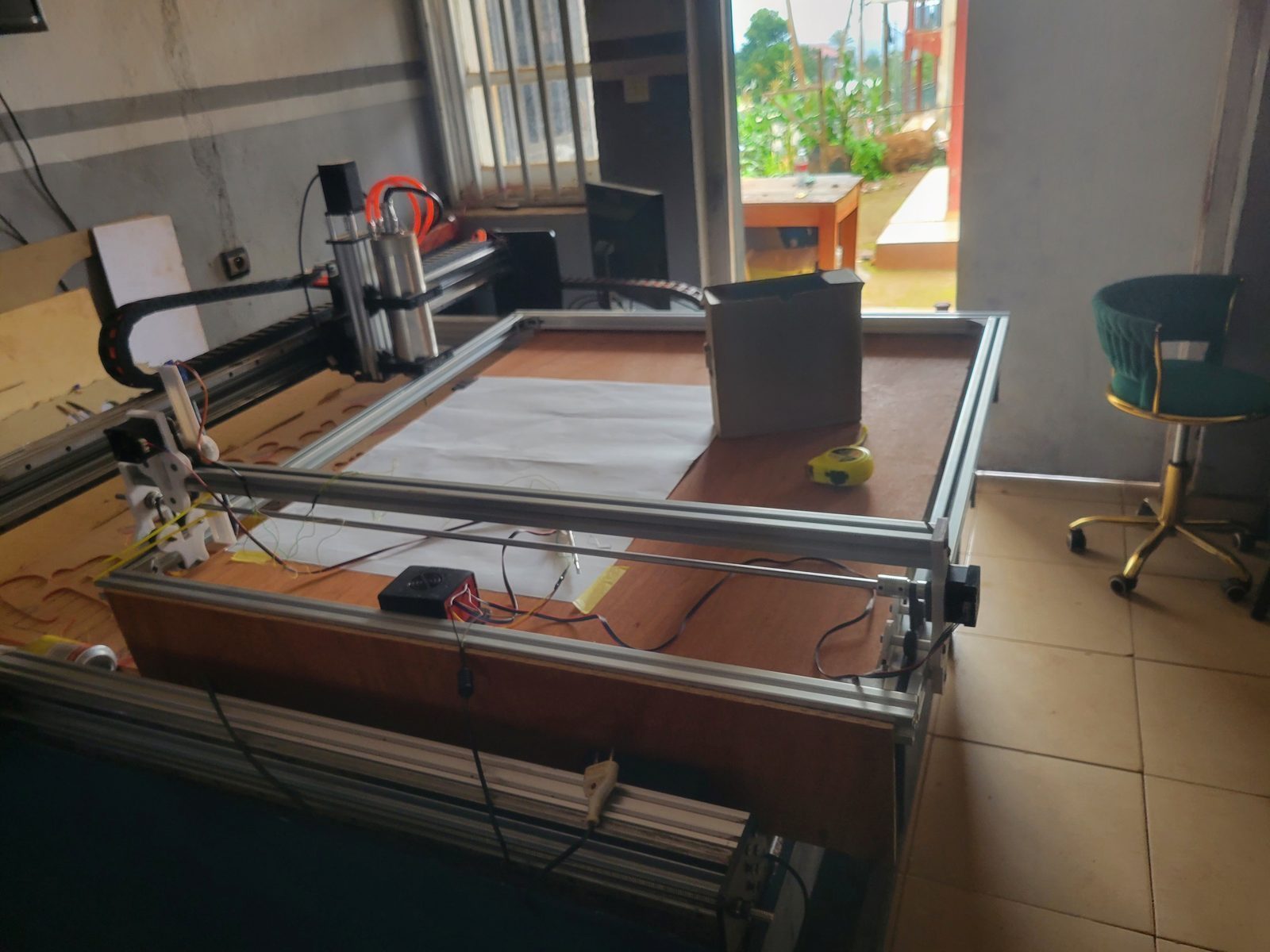
Plastic is turned into 3D filament in seven steps: collection, sorting, washing, shredding, drying, extrusion and spooling. Every one of those steps can ruin the batch if it is done badly, and the last one, diameter control, is the step that separates filament you can print with from filament that jams your machine at 2 a.m. This is how we do it at NestX in Bamenda, and why each step exists.
The reason to bother is sitting in the gutters. Cameroon produces around 600 000 tonnes of plastic waste a year and under 10% of it is recycled. A 2012 decree bans non-biodegradable plastic packaging at or below 60 microns, but enforcement is patchy. Those figures come from reporting on the informal plastic waste business in Yaounde. Meanwhile a spool of imported filament takes weeks to arrive and clears customs at whatever the day decides. Making it here solves two problems at once.
Step 1: Collection
We take post-consumer and post-industrial plastic. In practice that means packaging waste, printing waste from our own machines, failed prints, purge and support material, and offcuts from other workshops. Collection is not glamorous and it is not free. Somebody has to gather it, bag it and move it, and transport in Bamenda costs money.
The one thing worth knowing as a member of the public: plastic that is clean and separated is worth handling, and plastic mixed with food waste, soil and metal usually is not.
Step 2: Sorting by resin type
This is the step people skip, and it is the step that decides whether the batch works. Different plastics melt at different temperatures. PET softens around 250 degrees. PLA extrudes around 200. Mix them and the PLA burns while the PET is still stiff, and you get a blocked extruder and a brown, brittle strand.
Sorting is done by hand and by the resin code moulded into the item, backed up by simple physical tests. It is slow and it is boring. A single wrong piece can spoil a whole run, so we sort strictly and reject anything we cannot identify.
Step 3: Washing
Labels, adhesive, dust, sand and residue all have to come off. Adhesive is the worst offender. It chars inside the extruder and comes out as brown streaks in the filament, and those streaks become weak points in a printed wall. Sand is the second worst because it scores the extruder screw and the printer nozzle.
Washed flake then has to dry completely before it goes anywhere near heat, which is the next problem.
Step 4: Shredding
Clean plastic goes into a shredder and comes out as flake a few millimetres across. Uniform flake size matters more than most people expect. If flake sizes vary a lot, the extruder screw feeds unevenly, and uneven feed shows up later as a filament diameter that wanders up and down.
We build and repair our own machines in the workshop, shredder included. That is not a boast, it is necessity. When a shredder blade chips here, nobody stocks the replacement, so you either make it or you stop working. The same logic runs through everything on the services page.
Step 5: Drying, the step Cameroon makes non-negotiable
Plastic absorbs water out of the air. Bamenda humidity in the rainy season is high enough that flake left overnight in an open sack is already wet. When wet plastic hits a 200 degree extruder, the water flashes to steam inside the melt. You get bubbles, popping sounds, a rough surface, and a strand with voids in it that will snap.
So we dry the flake before extrusion, and we dry the finished spool again before a serious print. In a dry climate this is optional. Here it is the difference between usable filament and firewood.
Step 6: Extrusion
Dried flake goes into a hopper. A heated screw melts it and pushes the melt through a die with a round hole. What comes out is a hot, soft strand. It is pulled through a cooling section by a puller, and the speed of that puller against the speed of the screw is what sets the final diameter. Pull faster and the strand stretches thinner. Pull slower and it comes out fatter.
A diameter gauge watches the strand continuously and the puller speed is trimmed to hold the target. This is a control loop, and like any control loop it is only as steady as its inputs. Uneven flake, a temperature swing, or an ENEO cut mid-run all show up in the numbers.
Step 7: Spooling
The cooled strand is wound onto a spool under light, even tension. Wind it too loose and coils slip over each other and lock, which snaps the filament mid-print at the worst possible moment. Wind it too tight and the spool deforms. Wound properly, filament pays out smoothly for twenty hours without a single tangle.
Finished spools are bagged with desiccant. Filament that sits open on a shelf in this climate for two weeks needs drying again before use.
Why diameter tolerance is the number that matters
A 3D printer does not measure the plastic it is pushing. It assumes the filament is exactly 1.75 mm and calculates how far to advance the motor to lay down a known volume of plastic. If the real diameter is thicker, it over-extrudes and you get blobs, poor dimensional accuracy and a nozzle that drags. If it is thinner, it under-extrudes and you get gaps between walls and a part that splits along its layer lines.
| Diameter behaviour | What you see in the print | Usual cause |
|---|---|---|
| Consistently oversize | Blobs, rough top surfaces, dimensions too large | Puller too slow, or gauge target set wrong |
| Consistently undersize | Gaps between walls, weak layers, dimensions too small | Puller too fast |
| Swinging up and down along the spool | Alternating bands of blobs and gaps on tall parts | Uneven flake feed, temperature swing, or a power interruption mid-run |
| Oval instead of round | Clicking extruder, intermittent under-extrusion | Strand touched the cooling path or was wound while still soft |
| Voids inside the strand | Popping at the nozzle, brittle layers, sudden snaps | Flake was not dried |
Good filament holds diameter within a tight band all the way along the spool. That band, not the colour and not the marketing, is the quality of the product.
Power, and what it does to a run
An extrusion run cannot be paused cleanly. Stop the screw and the melt sitting in the barrel keeps cooking, and the first metres after a restart are scrap. Around 72% of Cameroon had electricity access in 2023 according to World Bank data, and having a connection is not the same as having steady supply. ENEO has implemented rotational rationing across the Southern Interconnected Grid, which includes the North West. We schedule runs around known outage windows and keep backup for the ones we cannot move. That is also why we quote realistic dates rather than optimistic ones.
What this means for you as a customer
You do not have to care about any of this if you are buying a printed part. It is our problem, and it is priced into the job. What drives your cost is material used, print time, machine time and complexity, and you get a quote in 24 hours.
If you are buying filament by the spool, ask two questions of any supplier, us included: what is your diameter tolerance, and was the feedstock dried. A supplier who cannot answer those has not measured.
If you want to know whether recycled stock is right for your part, read is recycled filament good enough. If you want a part made rather than filament bought, start at what you can actually get printed in Cameroon. Past work is in the gallery.
Bring us your plastic, or your part
Message the workshop on WhatsApp to talk about filament, a print job or a collection drop, and we will come back in 24 hours. Everything the workshop does is listed on the services page.
Questions people ask
How is plastic turned into 3D filament?
Seven steps: collect the waste, sort it strictly by resin type, wash off labels and adhesive, shred it into uniform flake, dry the flake completely, extrude it through a heated screw and a round die, then wind it onto a spool under even tension while a gauge holds the diameter steady.
Why does filament diameter tolerance matter?
A printer assumes the filament is exactly 1.75 mm and advances the motor to lay down a calculated volume. If the real diameter is bigger you get blobs and oversize parts. If it is smaller you get gaps between walls and parts that split along layer lines.
Why is drying so important in Cameroon?
Plastic absorbs moisture from the air, and humidity here is high. Wet plastic entering a 200 degree extruder turns that water to steam, which leaves bubbles and voids in the strand. We dry flake before extrusion and dry finished spools again before serious prints.
Can you mix different types of plastic together?
No. Different plastics melt at different temperatures. Mixing PET with PLA means one burns while the other is still stiff, which blocks the extruder and produces brittle brown strand. Sorting by resin type is the step that decides whether a batch works.
Do power cuts affect filament production?
Yes. An extrusion run cannot be paused cleanly, because melt left in the barrel keeps cooking and the first metres after a restart are scrap. We schedule runs around known ENEO rationing windows and keep backup for runs we cannot move.
Can I bring you plastic waste?
Message us first on WhatsApp. Clean, separated plastic is worth handling. Plastic mixed with food waste, soil or metal usually is not, because the sorting and washing cost more than the material is worth.