
BlogAgri-Tech13 Sep 20267 min read
How to Choose an Egg Incubator: Capacity, Turning, Humidity
Size the machine to the chicks you can brood and sell, then judge turning, humidity, alarms and ventilation in that order.
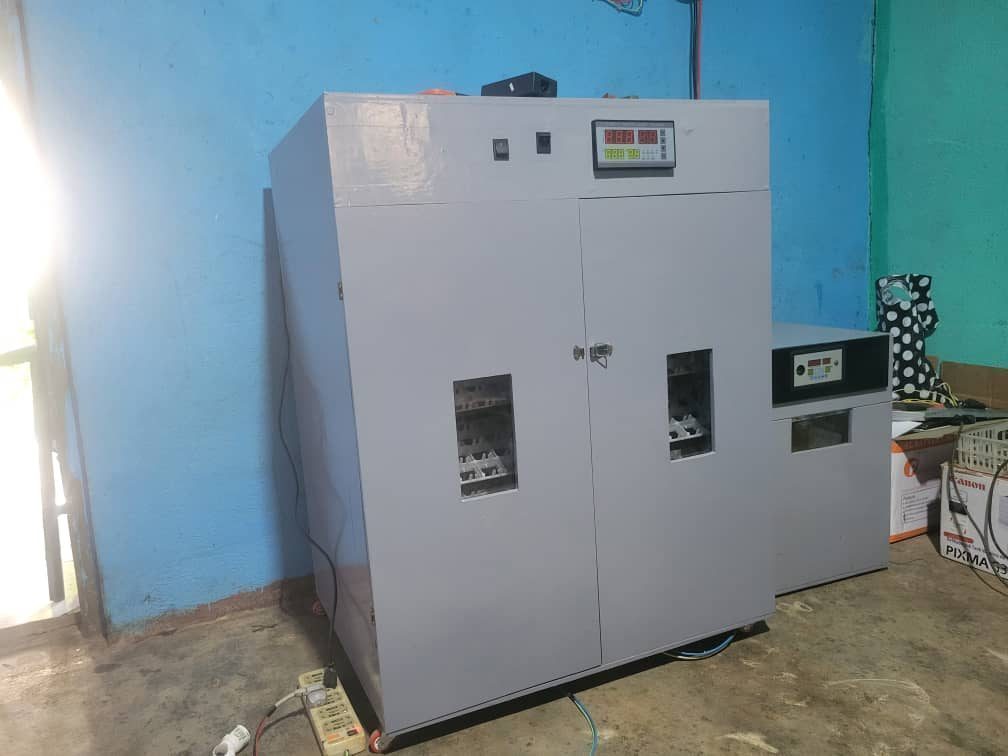
To choose an egg incubator, start from the number of chicks you can actually brood and sell, then work backwards to the cabinet. Almost every bad purchase in the North West happens in the other direction, where somebody buys the biggest machine the budget allows and then runs it a third full for a year. Capacity, turning, humidity control, alarms and ventilation are the five things that decide whether a machine suits you. Price is the sixth, and it should be last. This is the order a workshop that repairs these machines would use.
First decide the capacity, and be honest about it
An incubator runs a 21 day cycle for chicken eggs. Add three or four days to clean, disinfect and reset, and you have roughly one batch a month. So a 200 egg machine, run properly and kept full, gives you around 2 400 egg spaces a year. That is the number to compare against your market, not the cabinet size.
Three constraints cap you, and the smallest one wins.
- Fertile eggs. You need a reliable supply of fertile eggs from a breeding flock with cockerels. Eggs bought from a layer operation will not hatch, because there is no cockerel in a layer house. This single point defeats more first incubators than any machine fault.
- Brooder space. Chicks come out all at once and need heat, space, feed and clean water from hour one. If you can brood 200 chicks properly, hatching 500 is a disaster, not a success.
- Buyers. Day old chicks do not store. You either sell them within days or you are now raising them.
| Your situation | Sensible capacity | Why |
|---|---|---|
| Own flock, hatching to replace your own birds | 100 to 200 eggs | Matches replacement rate, easy to brood, low power draw |
| Selling chicks to neighbours and a local market | 300 to 500 eggs | Enough volume to be worth the labour, still manageable brooding |
| Supplying other farms as a business | 500 to 700 eggs | Needs steady fertile egg supply and real brooder capacity |
| Unsure, testing the market | Start small, add a second machine | Two machines let you stagger batches and survive one failure |
That last row is the advice most sellers will not give you. Two smaller machines beat one large one for a working farm. You can set batches two weeks apart so chicks arrive steadily rather than in one overwhelming wave, and when one machine goes down you still have a hatch coming.
Manual turning or automatic
Eggs must be turned. Inside the shell the embryo will stick to the membrane if the egg sits still, and a stuck embryo dies. Turning is done from the day you set the eggs until day 18, when you stop and let the chicks position themselves for hatching. The usual practice is to turn an odd number of times per day, most commonly three or five, so that the egg does not spend every night in the same position.
Manual turning means opening the cabinet and rotating every tray or every egg by hand, three to five times a day, every day, for 18 days. That is between 54 and 90 separate interventions per batch. It is free, and it works, and it fails the moment you travel, fall ill or simply forget on a busy Saturday.
Automatic turning is a motor and a timer that tilts the trays on a schedule. It costs more up front. What you are buying is not convenience, it is the removal of the single most common human cause of a poor hatch. It also keeps the cabinet closed, which matters more than people realise, because every time you open the door you dump the heat and humidity you have spent hours building.
If you buy a machine with automatic turning, ask two questions. Can the turner be operated by hand if the motor dies, and can the motor be replaced locally. Every NestX machine with automatic turning is built so you can still turn the trays manually while we replace a motor.
Humidity is where most people lose the batch
Temperature gets all the attention. Humidity is what quietly ruins hatches. An egg loses water through the shell during incubation, and that loss has to be right. Too little and the chick is too wet and swollen to turn and break out. Too much water lost and the membrane dries into leather that the chick cannot cut.
The working pattern is two phases. For roughly the first 17 or 18 days you hold a lower humidity, and then for the final three days, the hatching phase, you raise it sharply and stop opening the machine. The PLOS ONE prototype built by Cameroonian researchers in 2025 held 68 to 75 per cent relative humidity at 37 to 38 degrees Celsius, which gives you a sense of the range these machines work in.
What to look for when buying:
- A water tray or reservoir you can top up without opening the main door during the last three days.
- A humidity reading you can actually see, not just a heating light.
- Enough water surface area to hold humidity in dry season. In Bamenda between November and February the air is dry, and a machine that holds humidity easily in July will fight you in January.
Be suspicious of any incubator sold without a way to read humidity. You cannot control what you cannot measure, and a hygrometer is not an optional extra.
Alarms are not a luxury here
This is the point where Cameroon changes the answer. In a country with stable power, an alarm is a nice feature. With ENEO running rotational rationing across the Southern Interconnected Grid, an alarm is the difference between noticing a problem in twenty minutes and discovering it the next morning with 400 dead embryos.
A useful alarm tells you three things: temperature has gone above the safe band, temperature has gone below it, and humidity has collapsed. High temperature is the emergency. Embryos tolerate a few hours of cold far better than a short spell of overheating. If a machine offers you only one alarm, it should be the high temperature alarm.
We build temperature and humidity alarms into our incubators for exactly this reason. The full argument about outages, thermal mass and battery backup is in why incubators fail in power cuts.
Ventilation, the part nobody asks about
A developing embryo breathes. It takes oxygen in through the shell and pushes carbon dioxide out. A sealed box kills eggs slowly and the farmer usually blames the temperature. Any incubator needs vents, and the ventilation requirement rises through the cycle as the embryos grow, which is why you open vents wider in the final week.
Ventilation and humidity pull against each other. More air movement dries the cabinet. That tension is the real engineering in an incubator, and it is why a cheap machine with a fan bolted on and no thought about air path performs worse than its specification suggests. When inspecting a machine, look for a deliberate air path: where air enters, where the fan pushes it, how it passes the trays, where it leaves.
A short inspection checklist
- Open it. Look at the wiring and the heating element. If the seller will not open it, walk away.
- Check tray spacing and whether trays come out cleanly when full.
- Confirm there is both a temperature and a humidity display.
- Ask for the power draw in watts.
- Ask what happens during a two hour outage.
- Ask who repairs it, where, and how quickly.
Question six decides more than the other five. An imported machine with no repair path locally is a consumable, not an asset. On what the market actually charges, see egg incubator prices in Cameroon.
Tell us your numbers
Send your egg supply, your brooder space and your power situation on WhatsApp and we will tell you what size machine actually fits, with a quote in 24 hours. Our incubators and other equipment are on the services page, and there are finished machines in the gallery.
Questions people ask
What size incubator should I buy?
Size it against the smallest of three limits: your supply of fertile eggs, the number of chicks you can brood properly, and the number you can sell. A 200 egg machine run monthly gives around 2 400 egg spaces a year, which is usually more than a first time farmer expects.
Is automatic turning worth the extra cost?
For most farms yes. Manual turning means 54 to 90 separate interventions per batch across 18 days, and the batch is lost the week you travel or fall ill. Automatic turning also keeps the door closed, which protects heat and humidity.
How often should eggs be turned?
An odd number of times a day, commonly three or five, from the day you set them until day 18. After day 18 you stop turning, raise humidity and leave the machine closed for hatching.
Why does humidity matter more than people think?
Because the egg must lose the right amount of water through the shell. Too little loss and the chick is too swollen to turn and break out. Too much and the membrane dries into leather the chick cannot cut. Dry season in the North West makes this harder, so the machine needs enough water surface area.
Can I use eggs from my layer birds?
No. Layer houses have no cockerel, so those eggs are not fertile and will never hatch. You need eggs from a breeding flock. This is the most common reason a first batch fails completely.
Should I buy one large machine or two smaller ones?
Two smaller machines are usually better for a working farm. You can stagger batches two weeks apart so chicks arrive steadily, and when one machine goes down you still have a hatch coming.