
BlogAgri-Tech13 Sep 20267 min read
Egg Incubator Prices in Cameroon: Imported vs Built Here
What incubators really cost in Cameroon once you count repair, spares and the batches you lose while the machine is down.
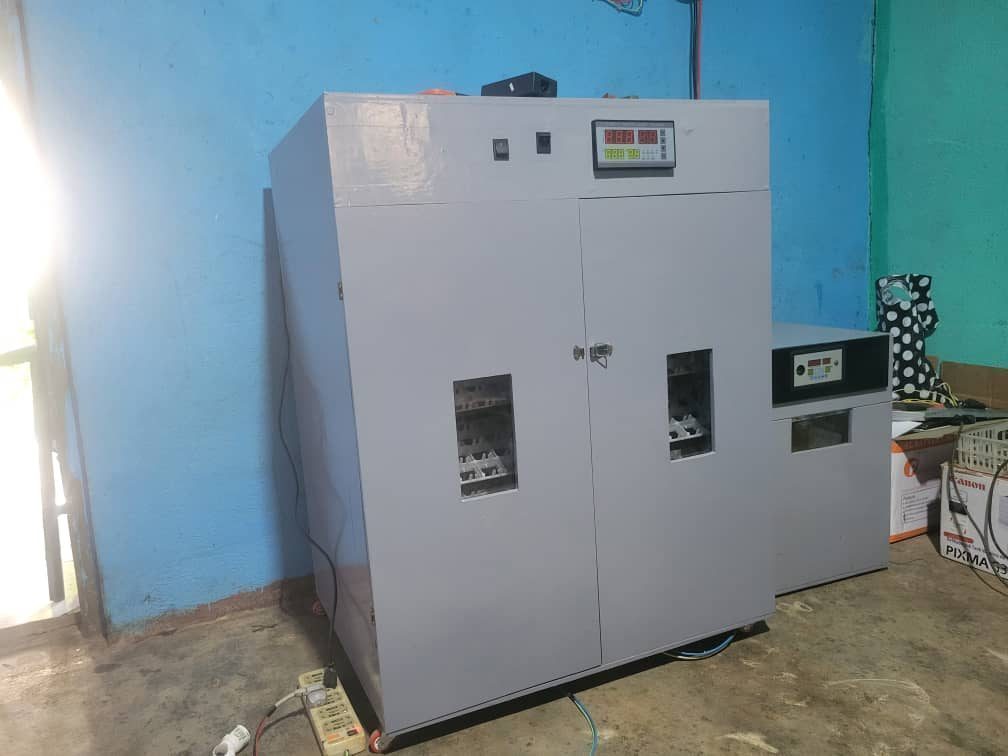
There is no single egg incubator price in Cameroon, and anyone who quotes you a figure before asking how many eggs you intend to set is guessing. What you can compare are the real numbers sitting on the market today. An imported 510 egg solar hybrid incubator is advertised in Douala at 370 000 FCFA. A commercial HHD 200 costs around 412 USD in Cameroon. NestX builds incubators in Bamenda in sizes up to 700 eggs, and we give you a quote in 24 hours once we know your capacity and whether you need solar. This post is about what those numbers actually buy you, and about the costs that never appear on any price tag.
The two prices you can verify
Start with the Douala listing, because it is public and specific. A 510 egg solar hybrid machine at 370 000 FCFA, advertised as running on 220V mains, on 12V solar or battery, or on kerosene, with a claimed 90 per cent hatch rate. That works out at roughly 725 FCFA for every egg space in the cabinet. Hold that number, because per egg space is the only fair way to compare machines of different sizes.
The second number comes from a peer reviewed paper published in PLOS ONE in May 2025 by Kemegne Tagne, Kanaa, Owoundi and Obono Biyobo. They record a commercial HHD 200 selling in Cameroon at about 412 USD, which is a little over two dollars per egg space, and then they build a local alternative that holds 37 to 38 degrees Celsius and 68 to 75 per cent relative humidity. That paper matters for a reason beyond the price. It is Cameroonian researchers demonstrating that a machine built here can hold the conditions an egg needs. The performance gap that people assume exists between imported and locally built is not automatic.
| Machine | Capacity | Advertised price | Cost per egg space | Who repairs it |
|---|---|---|---|---|
| Imported solar hybrid, Douala listing | 510 eggs | 370 000 FCFA | about 725 FCFA | the seller, if he still has the model |
| HHD 200 commercial unit | 200 eggs | about 412 USD | about 2 USD | agent, spares ordered abroad |
| NestX built, Bamenda | up to 700 eggs | quote in 24 hours | depends on specification | the workshop that made it |
The price on the label is not the price you pay
Every incubator is a heater, a fan, a humidity source, a controller and a turning mechanism inside an insulated box. Four of those five will eventually fail. That is not a criticism of any machine, it is just what happens to hardware that runs continuously in a room with dust, insects and unstable mains voltage.
So the real question is what happens on the day it fails. With a machine we built, you send a photograph on WhatsApp, we identify the part, and we make or fit the replacement in the workshop. With an imported unit, you first have to find out what the failed component is, then find somebody who stocks it, and usually you discover that nobody does. The controller board is unbranded. There is no schematic. The seller has moved on to a different model. You are holding a 370 000 FCFA cabinet that is now a cupboard.
This is the part of the calculation buyers skip. An incubator is not a purchase, it is a machine you will own for years, and its cost is the purchase price plus every repair plus every batch you lose while it is down.
Put a number on downtime
You can work this out yourself, and you should before you buy anything. Take the capacity of the machine. Take the hatch you realistically expect, not the one on the advert. Multiply. That is how many day old chicks one batch produces. Now price those chicks.
Day old chicks in the North West normally sell somewhere around 300 to 350 FCFA. During the shortage that led the government to distribute 900 000 day old chicks to North West farmers, the price on the open market reached 600 FCFA. So the same batch is worth roughly twice as much in a bad season as in a good one, and a bad season is exactly when your machine being dead hurts most.
Run the arithmetic on a 500 egg batch. If you get 350 chicks out of it and the going rate is 350 FCFA, that batch is worth 122 500 FCFA. A cycle is 21 days plus a few days to clean and reset, so roughly a month. A machine that sits broken for three weeks waiting on a part from Douala has cost you most of a batch. Two of those in a year and the difference between a cheap machine and a repairable one has disappeared.
What actually drives the price of a built machine
We do not publish a price list, because a price list for incubators is misleading. Five things move the number, and you control all of them.
- Capacity. The cabinet, the heating element, the fan and the tray set all scale. A 700 egg machine is not simply three times a 200 egg machine, but it is not the same machine either.
- Turning mechanism. Manual trays that you rotate by hand are cheapest. A motorised turner on a timer costs more and removes the single most common cause of a poor hatch, which is somebody forgetting.
- Solar readiness. A machine built to run from a battery bank needs DC compatible heating, a charge controller and sensible current draw. That is a design decision made at the start, not a socket added at the end.
- Alarms and instrumentation. Temperature and humidity alarms cost something and save batches. A machine that cannot tell you it has drifted will not tell you until the eggs are dead.
- Cabinet and insulation. Better insulation costs more in materials and pays you back in every outage, because a well insulated box holds heat far longer when the power drops.
We go through how to choose between these in how to choose an egg incubator, and the solar question in detail in why incubators fail in power cuts.
Be sceptical of the hatch rate on the advert
The Douala listing claims 90 per cent. Treat every headline hatch figure as a laboratory number achieved with fresh, fertile, well stored eggs by somebody who was watching the machine. Hatch rate is mostly determined by your eggs and your handling, not by the badge on the cabinet. An incubator can only fail to ruin good eggs. It cannot rescue bad ones. We take that claim apart properly in what hatch rate should you actually expect.
Power is part of the price
ENEO has implemented rotational rationing across the Southern Interconnected Grid, which includes the North West, and the company has not committed to fixed outage durations. Meanwhile 72 per cent of the population had electricity access in 2023, which means a large share of the farms that most need to hatch their own chicks are the ones furthest from a reliable line.
If you buy a 220V only machine, your true cost includes whatever you spend keeping it powered. Budget for that at the point of purchase, not after your first ruined batch.
Questions to ask any seller before you pay
- Which component fails most often on this model, and do you have that part in stock today?
- Can I see inside the machine before I buy it?
- What is the current draw in watts, so I can size a battery?
- What happens to the temperature if the power goes off for two hours?
- If the controller dies in eighteen months, who fixes it and how long does it take?
A seller who cannot answer the fifth question is selling you a box, not an incubator.
Why we quote rather than publish
Tell us how many eggs you want to set at a time, whether you want automatic turning, and whether the machine has to survive without mains power. We come back within 24 hours with a real number for that machine. Payment goes through MTN MoMo or Orange Money, and finished machines travel by transport agency to Bafoussam, Douala, Yaounde and elsewhere with a waybill number you can track.
Get a quote
Message the workshop on WhatsApp with your capacity and your power situation, and we will send a quote in 24 hours. Everything the workshop builds is listed on the services page, and finished machines are in the gallery.
Questions people ask
How much does an egg incubator cost in Cameroon?
There is no single price. A 510 egg imported solar hybrid unit is advertised in Douala at 370 000 FCFA, and a commercial HHD 200 costs about 412 USD here. NestX does not publish a price list because capacity, turning mechanism and solar readiness change the figure. Send us your capacity and we quote in 24 hours.
Is a locally built incubator as good as an imported one?
On performance, a well built local machine holds the same conditions. Cameroonian researchers publishing in PLOS ONE in May 2025 built a local prototype holding 37 to 38 degrees Celsius and 68 to 75 per cent humidity. On repair, the local machine is clearly better, because the person who built it can fix it.
Why does NestX not publish prices?
Because the machine is built to your specification. Capacity, whether turning is manual or motorised, whether it is designed to run from a battery bank, and what alarms you want all move the price. A published figure would be wrong for most buyers. You get a real quote in 24 hours.
What is the real cost of a machine I cannot repair?
The purchase price plus every batch lost while it sits broken. A 500 egg batch producing 350 chicks at 350 FCFA is worth 122 500 FCFA. Three weeks waiting for a part from Douala costs you most of that, and chick prices reached 600 FCFA during the last North West shortage.
Can you deliver outside Bamenda?
Yes. Machines go by transport agency to Bafoussam, Douala, Yaounde, Buea and elsewhere, and we send you the waybill number. Payment is by MTN MoMo or Orange Money.
What size incubator should I start with?
Size it against the flock you can actually brood and the chicks you can sell, not against the biggest machine you can afford. An oversized incubator run half empty wastes power during rationing. Our guide on choosing an incubator walks through the sizing.