
BlogFabrication & Hardware13 Sep 20268 min read
Acrylic, Wood and PVC Cut to Size: Get It Right First Time
What we cut, the biggest single piece we can do, which files work, and the five mistakes that send a job back to the machine twice.
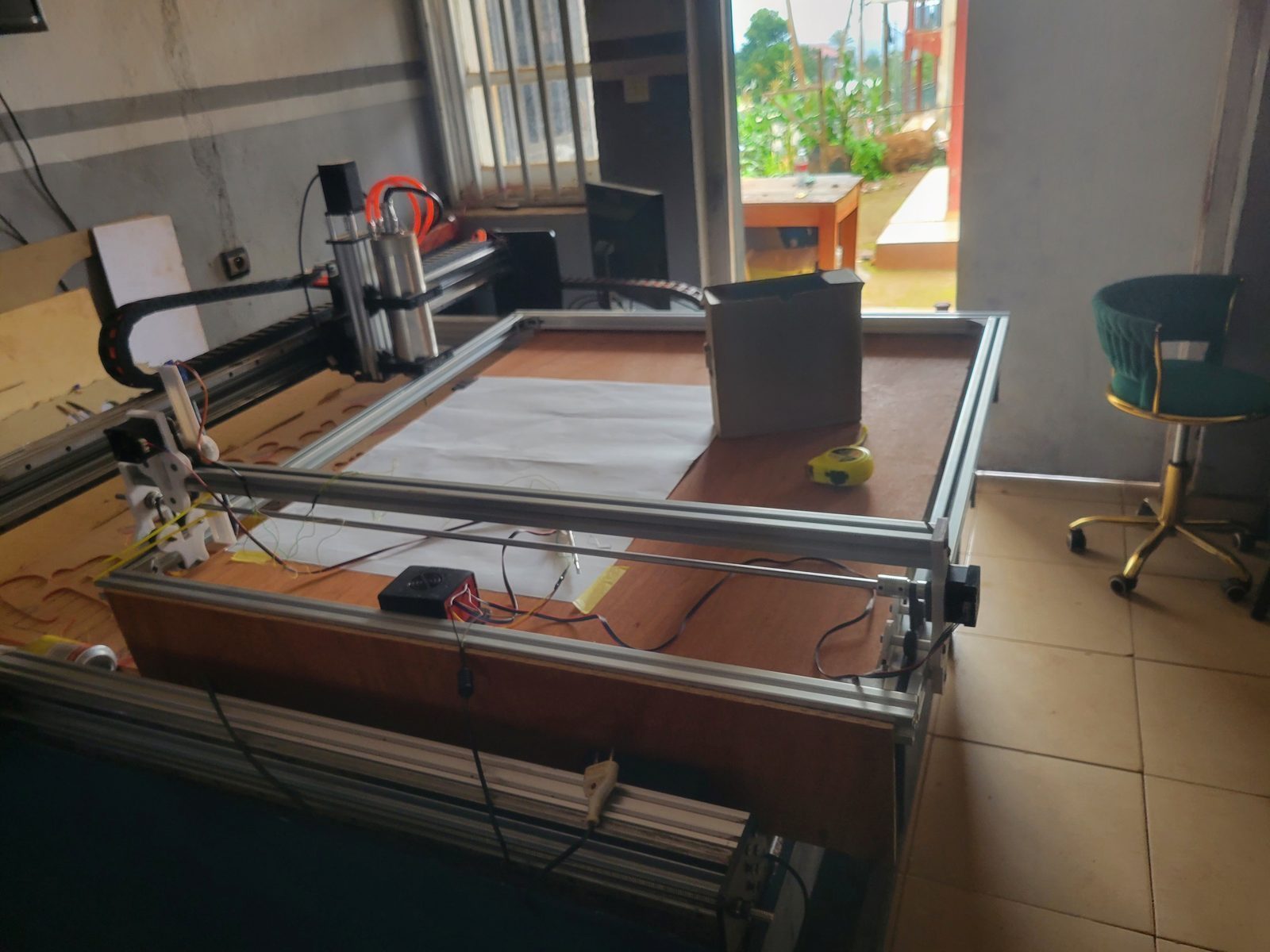
Acrylic cut to size in Cameroon is a laser job, and we do it in Bamenda. We cut acrylic, plywood, MDF, thin hardwood, card and leather on the laser, and we cut PVC, thicker wood and board on the CNC router. The maximum single piece we cut is 1 m x 0.9 m. Anything larger is cut in sections designed to join, and we design the joint so it is deliberate rather than an apology. This post covers what we can cut, how to measure, which files work, and the five mistakes that cost people a re-cut.
What we cut, and on which machine
| Material | Machine | Notes |
|---|---|---|
| Acrylic sheet | Laser | Polished, flame-finished edge straight off the machine. Cast acrylic engraves a clean frosted white. |
| Plywood and MDF | Laser or CNC router | Laser for detail and thin sheet. Router for thicker board and larger work. |
| Thin hardwood | Laser | Edges come out darkened. That is normal and can be sanded or used as a feature. |
| PVC and foam PVC | CNC router only | Never lasered. See below. |
| Card, paper, leather, felt | Laser | Good for packaging prototypes, stencils and templates. |
| Metal | Neither | We do not cut metal sheet. We will say so rather than waste your time. |
Why PVC never goes near the laser
When PVC is cut with a laser it releases chlorine compounds. That gas is harmful to breathe and it corrodes the inside of the machine, including the optics and the rails. It is one of the few absolute rules in a fabrication workshop. If you need PVC cut, it goes on the router, and the edge finish is different: routed rather than polished. Tell us the material honestly. A sheet sold as acrylic that is actually PVC damages equipment, and we can usually tell, but we would rather you told us first.
Maximum size and how we handle bigger jobs
One piece, 1 m x 0.9 m. That covers most signboards, panels, display stands, templates and furniture components.
For larger work we cut in sections designed to join. Done properly this is not a compromise. Options include interlocking finger joints for wood, overlap plates behind the seam for acrylic signage, a splice that falls on a mounting point where it will be hidden, or simply placing the joint on a line that already exists in the artwork. What matters is that the join is planned in the file, not improvised on site. Send us the finished dimensions and tell us which face will be visible, and we will propose the split before we cut anything.
File formats that work
We accept PDF, AI, SVG, DXF and CDR for cutting and engraving, and STL for 3D printing. In practice the format matters less than what is inside it.
- Send vectors, not pixels. A JPG or a PNG is a picture of a shape, not a cutting path. We can redraw it, but that is design time and it goes into the quote. A screenshot of a drawing is the same problem.
- Convert text to outlines or curves. If you send live text and we do not have your font, the machine substitutes something else and your sign comes out in the wrong typeface.
- Close your paths. An open path that looks closed on screen leaves an uncut tab in the sheet.
- Remove duplicate lines. Two identical paths stacked on each other means the laser cuts the same line twice, which widens the kerf and chars the edge.
- Set the document to real size in millimetres. Not A4 with a small drawing on it, unless you tell us the drawing is to scale.
- Separate cut lines from engrave areas. Different colours or different layers, and tell us which is which.
Tolerance and the thing nobody accounts for
A laser does not cut along a line. It burns a narrow channel of material away, centred on the line. That channel is the kerf. A router does the same thing with a cutter of a known diameter. The kerf is small, but it is not zero, and it decides whether parts fit together.
We account for kerf, but we need to know which dimension you actually care about. Say which of these your number refers to:
- Outside dimension. The overall size of the finished piece. Most common for panels and signage.
- Fit dimension. A slot that a 6 mm sheet must slide into, or a hole a 20 mm tube must pass through. Tell us the mating part and its actual measured size, not its nominal size.
- Hole centres. For anything that bolts to something else. Give centres, not edge distances.
Sheet thickness is the other trap. Sheet sold as 3 mm is often not exactly 3 mm, and the variation is enough to make a finger joint either loose or impossible. If your design has slots that receive another piece of the same sheet, we measure the actual sheet before cutting. If you supply your own material, measure it and tell us the number.
How to measure so we get it right first time
- Work in millimetres. Every number, every time.
- Measure the space, not the old piece. Old panels shrink, warp and get trimmed.
- Measure the width in three places and the height in three places. Walls, frames and openings are rarely square, and the smallest number is the one that has to fit.
- Mark which face is the front. Engraving and any asymmetry depend on it, and a mirrored part is a scrap part.
- Note any clearance you want. If a panel must slide into a frame, say how much gap you want around it rather than leaving us to guess.
- Send a photograph of where it is going. It catches problems a drawing hides.
The five mistakes that cost a re-cut
- A raster image instead of a vector file. Costs design time and sometimes accuracy.
- Live text in the file. Font substitution silently changes the artwork.
- A single measurement of an opening that is not square. The piece binds on one corner.
- Nominal sheet thickness used in slot design. Joints come out loose or will not assemble.
- No front face marked on an asymmetric part. The piece is cut mirrored and cannot be used.
Every one of those is avoidable in five minutes before you send the file. We check files before cutting and flag problems back to you, but we can only flag what we can see. We cannot know that your 400 mm opening is 397 mm at the bottom.
Quote, payment and delivery
Cost is driven by the material used, machine time, the cutting length and complexity of the path, and whether we have to redraw the artwork. Send the file or the dimensions and you get a quote in 24 hours. Payment goes through MTN MoMo or Orange Money, and finished work travels by transport agency to Douala, Yaounde, Buea and Bafoussam with a waybill number.
Cut samples and finished signage are in the gallery, and larger fabrication jobs are in the portfolio. If your part is three-dimensional rather than flat, read what you can actually get 3D printed in Cameroon, and if it is a machine component that has failed, read spare parts nobody imports.
Send the file or the dimensions
Message the workshop on WhatsApp with your file, your material and your sizes in millimetres, and we will check it and quote in 24 hours. Everything the workshop cuts, prints and builds is listed on the services page.
Questions people ask
What is the largest piece you can cut?
One metre by 0.9 metres in a single piece. Larger work is cut in sections designed to join, with the joint planned in the file so it falls on a mounting point, a hidden seam or an existing line in the artwork.
Which file formats do you accept?
PDF, AI, SVG, DXF and CDR for cutting and engraving, and STL for 3D printing. Send vectors rather than JPG or PNG images, convert text to outlines, close your paths and set the document to real size in millimetres.
Can you laser cut PVC?
No. Lasering PVC releases chlorine compounds that are harmful to breathe and corrode the machine optics and rails. PVC is cut on the CNC router instead, which gives a routed rather than a flame-polished edge.
How accurate is the cut?
Accurate enough for tight-fitting joints, provided you tell us which dimension matters. A laser removes a narrow channel of material called the kerf, so say whether your number is an outside dimension, a fit dimension or a hole centre, and give us the measured size of any mating part.
How should I measure an opening?
In millimetres, in three places across the width and three down the height. Openings are rarely square and the smallest number is the one that has to fit. Measure the space rather than the old panel, and mark which face is the front.
What does a cut job cost?
It depends on the material used, machine time, the total cutting length and complexity of the path, and whether we have to redraw your artwork. Send the file or the dimensions and you get a quote in 24 hours.