
BlogAgri-Tech13 Sep 20267 min read
Why Incubators Fail in Power Cuts, and How Solar Fixes It
What a power cut does to your eggs on each day of the 21 day cycle, and what solar ready should actually mean.
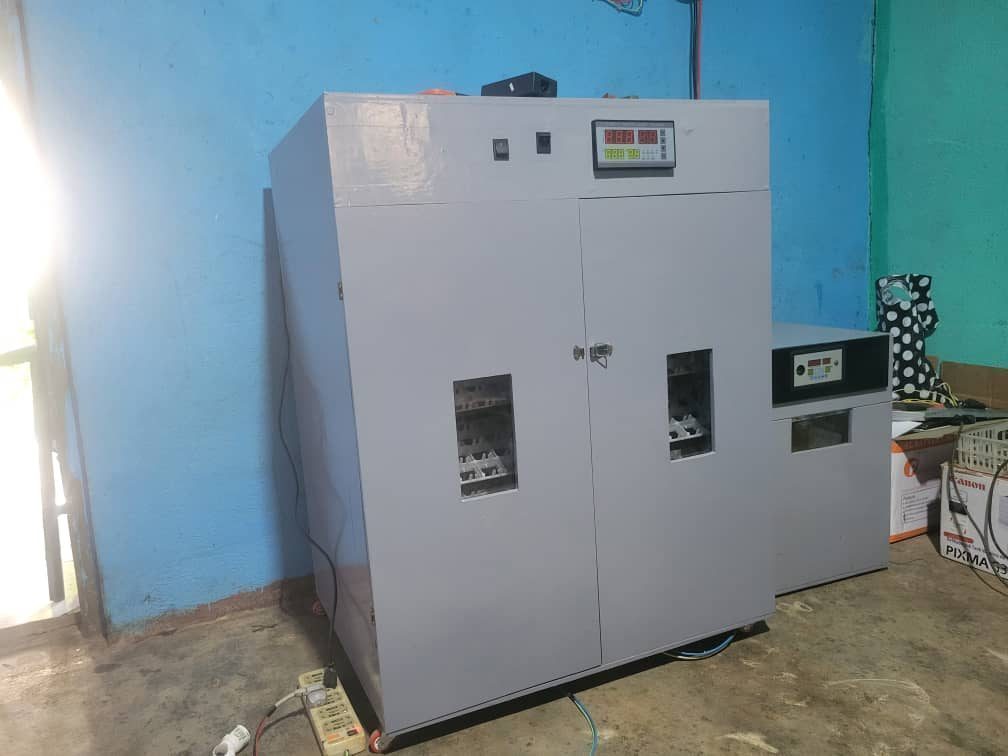
A solar egg incubator in Cameroon is not a luxury feature, it is the difference between finishing a batch and losing one. Incubators fail in power cuts for a simple reason: an incubator is a heater that must never stop, and the grid here does stop. ENEO has implemented rotational rationing across the Southern Interconnected Grid, which includes the North West, and the company does not publish fixed outage durations, so you cannot plan around a schedule. On top of that, 72 per cent of the population had electricity access in 2023, meaning many of the farms that most need to hatch their own chicks sit at the weak end of the line. This post explains exactly what an outage does to your eggs, when it matters most, and what solar readiness should actually mean.
What happens inside the cabinet when the power goes
The heating element stops and the fan stops. Two things then happen at once. The cabinet starts losing heat to the room, and without the fan the air stops circulating, so the box develops hot and cold pockets. Eggs on the outer edges of the trays cool faster than eggs in the middle.
How fast the temperature falls depends on three things: how well the cabinet is insulated, how much mass is inside it, and how cold the room is. This is why a 300 egg machine sitting full, with water trays topped up, holds temperature far longer than the same machine holding thirty eggs. Water and eggs are thermal mass. They store heat and release it slowly. An incubator run nearly empty during rationing season is a machine with no buffer.
Bamenda helps you slightly here. Nights are cooler than in Douala, which is bad during an outage, but the daytime ambient temperature sits closer to incubation temperature than most people assume, so the gradient the cabinet is fighting is smaller than in a cold climate.
An outage does not cost the same on every day
This is the part most farmers do not know, and it changes how you respond. The 21 day cycle has three distinct phases, and an embryo's tolerance of a cold spell is different in each.
| Days | What is happening | Effect of a power cut | What to do |
|---|---|---|---|
| 1 to 3 | Cell division, the embryo is establishing | Most fragile stage. A long cold spell here kills outright or causes deformity | Never start a batch without backup power ready |
| 4 to 10 | Organs and structures forming, little heat produced by the embryo | Vulnerable. The batch relies entirely on the machine for heat | Keep the door shut, cover the cabinet, restore power fast |
| 11 to 17 | Growth, embryos start producing their own heat | More tolerant of cold, but hatches get delayed and uneven | Watch for the opposite problem, overheating on restart |
| 18 to 21 | Hatching. Chicks are breathing air and generating real heat | Heat and humidity loss now, plus no ventilation, is dangerous | Do not open the door. Protect humidity above all |
Two practical rules come out of that table. First, the early days are the expensive ones to lose, so time the start of a batch for when you are around and your backup is working. Second, from day 11 onward the embryos are themselves a heat source, and when power returns after a long cut the machine can overshoot. Overheating for one hour does more damage than cold for four. If your machine has a high temperature alarm, this is the moment it earns its price.
The cheapest fix costs nothing
Before anyone spends money on batteries, do the free things.
- Keep the door closed. Every opening during an outage dumps the heat you are trying to hoard. Resist the urge to check.
- Keep the water trays full. Water is thermal mass and it is free. A full reservoir slows the temperature fall and holds humidity.
- Throw a blanket over the cabinet. Loosely, not sealing the vents. It buys you real time.
- Run the machine full. Batch your eggs so the cabinet is loaded, not a third empty.
- Put the machine in the right room. Interior room, away from draughts and away from a wall that gets cold at night.
These are not substitutes for backup power. They extend the window from minutes to a useful number of hours, which is often all you need.
What solar ready should actually mean
Plenty of machines are advertised as solar. The Douala listing for a 510 egg unit at 370 000 FCFA says it runs on 220V, on 12V solar or battery, or on kerosene. Marketing language is cheap. Here is what the phrase should mean in engineering terms, and what to ask a seller.
- The heater works on DC, or the machine draws little enough that an inverter is not painful. A resistive heating element running through a cheap inverter wastes power at the worst possible moment.
- The machine tells you its power draw in watts. If a seller cannot state this number, the machine was not designed for battery operation. It has a solar sticker.
- Switching is automatic. If the changeover requires you to walk to the machine and flip something, the machine is not protected at two in the morning.
- The controller survives the switch. Some controllers reset when the supply changes, losing your settings and the day count.
- There is a charge controller sized for the panel and the battery. A panel wired straight to a battery will destroy that battery.
NestX builds solar ready designs, which means the machine is specified from the beginning for battery operation rather than having a socket added afterwards. When you ask us for a quote we ask about your power situation first, because it changes the design.
Sizing a battery, in plain arithmetic
You do not need to be an electrician to do this. You need two numbers and one multiplication.
Take the machine's power draw in watts. Multiply by the number of hours you want to survive without mains. That gives you watt hours. Divide by the battery voltage, usually 12, and you get amp hours. Then, and this is the step people skip, roughly double it. A lead acid battery that you regularly drain flat will be dead within a year, so you size it to use about half its capacity. Lithium batteries tolerate deeper discharge, but they cost more.
One important detail. The incubator does not draw its rated power continuously. The heating element switches on and off as the thermostat calls for heat, so average consumption over an hour is lower than the peak figure, sometimes much lower once the cabinet is up to temperature and well insulated. That is another reason insulation is worth paying for. Better insulation means fewer heating cycles, which means a smaller battery, which is usually the most expensive part of the system.
Work out your hours target honestly. Because ENEO will not state fixed outage durations, plan for a longer cut than you expect rather than the average one.
Panel, battery or generator
A generator is loud, needs fuel, and needs somebody awake to start it. It works for a planned long outage and it is useless at three in the morning. A battery with automatic changeover needs nobody. A solar panel is what keeps the battery charged without adding to your fuel bill, and in the North West dry season, roughly November to February, panel output is at its best precisely when the grid tends to be most strained.
The sensible order for a working farm is battery first, then panel. A battery with automatic switching solves the emergency. The panel solves the running cost. Buying a panel with no battery solves nothing, because outages do not restrict themselves to daylight.
Why the repair question returns here
Off grid hardware fails. MIT D-Lab's work in Cameroon documents rural farmers relying on imported chicks that are infertile or low quality and a lack of off grid hatching solutions. The gap is real, and it is not closed by importing a machine whose charge controller nobody here can replace. When a solar incubator built abroad fails, you are troubleshooting a sealed system with no schematic. When one we built fails, you send a photograph on WhatsApp and we identify the part.
For sizing the machine itself, read how to choose an egg incubator. For what the market charges, see egg incubator prices in Cameroon.
Tell us your power situation
Message us on WhatsApp with your capacity and how bad your outages are, and we will quote a machine designed around that in 24 hours. The full list of what we build is on the services page, or reach us through the contact page.
Questions people ask
How long can eggs survive without power?
It depends on insulation, how full the machine is and the room temperature, so no honest seller gives you a single figure. A full cabinet with topped up water trays and a blanket over it holds heat far longer than a half empty one. Days 1 to 10 are the most dangerous time for a cut.
Which is worse for the eggs, cold or heat?
Heat. Embryos tolerate a few hours of cold much better than a short spell of overheating. The risky moment is often when power returns after a long cut, especially after day 11 when the embryos are producing their own heat. A high temperature alarm matters most here.
Should I buy a generator or a battery?
A battery with automatic changeover, first. A generator needs fuel and somebody awake to start it, which is no help at three in the morning. Add a solar panel afterwards to keep the battery charged and cut the running cost.
How do I work out what battery I need?
Take the machine's watts, multiply by the hours you want to survive, divide by 12 for a 12V battery, then roughly double the result so you never drain a lead acid battery flat. Ask the seller for the power draw in watts. If he cannot state it, the machine was not designed for battery operation.
Does solar ready just mean it has a solar socket?
On many imported machines, effectively yes. It should mean the heating and control are specified for battery operation from the start, the changeover is automatic, the controller does not reset on switching, and the charge controller is sized for your panel and battery.
Can I open the incubator during an outage to check the eggs?
No. Every opening dumps the heat and humidity you are trying to keep. This matters most from day 18 onward, when the chicks are hatching and humidity loss can leave them stuck in the shell.